

We were supposed to have dinner in Martinborough around 6pm. We were late. More accurately I suppose, we were suppose to have dinner in Martinborough the previous Thursday, so we were really late. Only that time we were late because of a car accident. Wine tasting is not quite as dramatic of an excuse.
And so I returned to Martinborough, approximately 7 months and 1 week after harvest had ended the previous spring/fall. The town looked, well, exactly as I remembered it. There was one significant development, the Pukemanu, the diviest dive bar around, was undergoing a renovation. It remained open for business however (indeed, I'm not sure any of the regular patrons had left their barstools). We met Huw and his girlfriend Amanda at the Hotel bar for dinner and drinks and to catch up on the latest goings on(sidenote: many of the pubs in NZ refer to themselves as "hotels", although many of them don't seem to have actual rooms to rent, save maybe a closet behind the bar for the sleepy drunk. Evidently the hotel industry is not extremely profitable in NZ. The drinking industry remains robust). Compared to the usual nights I had spent at the hotel, the evening was relatively low-key, most likely because Huw and Amanda both were still a bit hungover from the weekend's festivities.
After spending the night in Huw's new house, we tasted through a few of the old haunts of fellow interns (Palliser and Martinborough vineyards, as well as Schubert) before heading out to Escarpment to taste through the fruits of some very intense labor. After Hawks Bay, the air in Martinborough seemed very different than I remembered. The tasting rooms were a bit stuffier and the wines more expensive, and there was a distinct lack of bleary eyed unwashed harvest interns running around. Still, after the charm of Hawks Bay, Martinborough was a bit flat.
We went out to meet Huw at Escarpment, hoping along the way to run into some of the other Escarpment boys, but it seemed our timing couldn't have been worse. Larry (the winemaker) was running around doing last minute pre-Christmas errands, while Dave (the viticulturalist) was off attending some conference (I had a sneaking suspicion that he too was nursing a hangover in a dark corner somewhere, but I suppose we will never know). Nonetheless, the timing for tasting the wines was perfect, just after finishing their secondary fermentation but before being stabilized with sulfur (which makes the wine rather undrinkable until just before bottling). It was good to catch up with these old friends.
We left Martinborough that afternoon and made for Wellington, driving over the familiar and treacherous Pakuratahi pass through Upper Hutt. The kiwis are not big fans of building tunnels. Maybe its because they have such beautiful scenery. Maybe its because there is a distinct lack of high quality dynamite in NZ. Or maybe its because they have a lot of people that like building roads but there just aren't that many roads that need to be built. For whatever reason, they elect to build ridiculously dangerous roads over mountains that are just wide enough to fit you and an oncoming truck, if you hug the shoulder that is. Except there really isn't a shoulder. The road may be safe if you travel at the recommended speeds (although this is highly questionable), but the locals are more keen to test the physical limits of their machines on corners than obey any speed limit. The guard rails aren't much help either, and in some cases are even cemented into the ground. The one thing the road doesn't lack is crosses. Needless to say, it was a bit of a white knuckle crossing.
We pulled into Wellington with a few hours to kill before our ferry departed, so we headed down to Mac's brewery on the waterfront for a quick bite. The time passed quickly (funny thing about pubs), and as we got back into the car we noticed that our ferry ticket had a final boarding time about an hour before the departure time. Which meant our final boarding time was 15 minutes ago. And it was rush hour in Wellington. Well done.
Thankfully the final departure time was more of a suggestion than a requirement, and we made our ferry with about 10 minutes to spare. Nevermind that we were just about the last car aboard. One thing we had timed well that day was our arrival time in Picton, pulling into the gorgeous Queen Charlotte Sound just as the sun was going down. The ride was relatively smooth and quite beautiful, and as darkness descended our wheels hit the pavement of the south island. We were Renwick bound, ready to rest our bones on the same earth that yielded perhaps New Zealand's most famous wine: Marlborough Sauvignon Blanc.
Showing posts with label wine. Show all posts
Showing posts with label wine. Show all posts
Sunday, December 27, 2009


Hawks Bay...oh my goodness the goodness
Car packed, bruises healing and spirits high we bid Raglan goodbye and headed back into our adventure. Our backpacking plans still on hold for the time being, we decided to continue with our original plan and head for Hawks Bay, a wine region along the east coast of the north island well known for its cabernet, merlot and malbec. While our current car was slightly newer (1990) and bigger (it has 4 doors and a trunk!) than ole Moldy Milo (RIP), we were still a far cry from anything that might invoke such impressive adjectives as nice or clean. It did have an air conditioning unit entirely in Japanese and 10 disk cd changer (although the cd player part of the system had gone missing) so 19 years ago it was a probably a pretty good car. We were sincerely hoping that it would continue to be. Out of respect to Milo, we christened it Otis.
We had heard the drive could take anywhere from 4-7 hours, depending on how fast you planned on travelling. Fortunately for us, our travelling speed was pre-determined. Again, the car could physically go faster than Milo (RIP), capable of reaching speeds of 120km per hour whereas Milo topped out at 90. But any speed above 104km/h activated a safety alarm system. Yep, try to speed in this car and it will remind you in a gentle high-pitched cheerful chirp that you are going "too-fast, too-fast." A good way to avoid a speeding ticket perhaps, but also a good way to convince yourself that despite your lack of any real mechanical skills it still might be a good idea to root around under the hood with a screwdriver.
It may have been possible to drown out this wonderful little bell with some good tunes, but cleverly both front speakers were not functioning. Tapes and CDs were both out too, leaving only the radio as the only musical diversion (not a great option in a country that is largely unpopulated). I offered to sing, but one look at Tracy's face made it clear that this was not a solution. No the only solution was to drive at or below the speed limit. Thank god for the scenery.
We wound our way through the beautiful mountains and forests to Lake Taupo, pausing there just long enough to decide the wind would never be able to blow away all the tourists (although it was certainly trying). The skies had been a mixture of clouds to Taupo, but as we pushed on through the heavily logged forests of Tarawea to the coast, the skies cleared as if our choice of destination couldn't have been more correct.
Hawks Bay is divided into a few different wine regions, mostly centered around the town of Hastings, a little town about 20km south of Napier, the biggest city in the region. The most famous area is called the Gimlett Gravels, so named for the rocky well-drained former river bed that yields some of the best cab and merlot in the southern hemisphere. The Red Triangle is just south of the Gravels, and while it isn't quite as famous as its neighbor to the north, it is certainly making some pretty smart wines. The other big region lies the the south and east of Hastings along the coast and contains some of the bigger names in the region, including Craggy Range, Elephant Hill and Clearview. There isn't a huge amount of red being grown in this area (although all of the wineries are producing red wine from vineyards all over the region), but there is some really tasty Chardonnay and Savignon Blanc going on.
We tasted at a few wineries the day we arrived before retiring to our "backpackers", which was really more of a run-down motel. Unable to locate any kitchen facilities, we elected to barbecue using a rusty old grill on the property, a plastic drink tray from our room and my backpacking cookware. It was one of the finer meals we put together.
We hit the local farmers market the next day for breakfast and to provision ourselves with picnic supplies for a solid day of tasting. And taste we did. Working off recommendations of friends in the industry and tasting room staff of vineyards we'd enjoyed the day before, we wound our way through the Gimlett Gravels and Red Triangle. The best winery of the day? Unison vineyards. Far and away Unison vineyards. There are some seriously special wines coming out of this place. Like religious experience special wines...like mortgaging your soul to the devil's bank so you can stay steeped in this delicious nectar until the end of your days special wines...
Well maybe not quite that good, but you get the idea.
The next day we had planned to head to Martinborough to pay a call to the Escarpment crew (where I had worked harvest 6 months before), but we decided to spend the morning tasting along the coast. Curiously, while the Gimlett Gravels got all of the attention, we both agreed that the caliber of the vineyards along the coast was much higher (save Unison of course). Elephant Hill was the best, although Craggy Range was also quite good. One of the most surprising things about the region as a whole was the cost. Not only were tasting fees a rarity (unless there was a restaurant attached), but the prices of the wines were relatively inexpensive as well. You could get a fantastic bottle of cabernet or merlot for under $35, a bottle worthy of cellaring or giving as a wedding gift to Hugh Johnson and Jancis Robinson. We did taste a few duds, and there was a hint of snobbishness at a couple of wineries, but compared to buying pinot or tasting in Napa, this place was a little slice of heaven. My understanding is that this sort of phenomenon (affordable quality) is rather fleeting in the wine world, so we felt privileged to have gotten in at the ground floor. And seriously, pick up some wine from this region, you won't be disappointed. Or maybe you will and you can give the rest to me.
Sunday, February 22, 2009
Penguins, Marborough, and the road north
According to mapquest, I could expect the drive north to take somewhere in the neighborhood of 12 to 13 hours, provided that things were running smoothly. This is quite a long time to be alone in the car with just the radio for company, so I decided to pick up a hitchhiker just outside of Dunedin. Alex was probably in his early 20's and had grown up in France. He had spent the last 8 or 9 months hitchhiking his way through Australia before venturing over to NZ and was on his way north to Christchurch to visit some friends before popping over to Nelson.
Debbie and Hamish had informed me of another spot along the road north were chances were very good I would run into Yellow-eyed penguins, so Alex and I took a slight detour from the road north to see if we could track them down. My instructions were a bit vague, I was to look for a lighthouse up a road in a small town at the second peninsula from Dunedin, but fortune was with us and we found it during our first attempt. Ordinarily I'm sure the place would have been overrun with tourists, but given the early hour we had the place largely to ourselves. It was approaching the end of the penguin nesting season, and the nesting areas were fenced off from the public. Of course, while a wooden fence might mean something to a human, it is little more than a curious looking tree to a penguin. We walked along the fence peering into the bushes but didn't see much. Turning around, I tapped Alex on the shoulder. The penguins weren't in their designated nesting area, they were all over the hill outside of it! You could tell they weren't going to be here much longer, the chicks looked fully grown and had shed most of their fluff, but we had timed it perfectly. It was penguin-tastic.
Back on the road again, Alex and I chatted about music and travelling, and life in general. He had gone to school to pursue sculpture, but had felt a bit disenchanted with the job prospects in the field and had started travelling, working along the way as he went. He planned on spending another month in NZ before returning home to France for a spell, earning some euros and then heading on to Mongolia (or maybe Montana). We exchanged some music info and email addresses, and I left him Christchurch around noon.
Waipara is another wine region just to the north of Christchurch that produces some great wine, and I wanted to stop there for lunch at a winery called Pegasus Bay. It was by far the most expensive meal I have eaten so far, but the grounds were beautiful and I met some folks from Wrigleyville in Chicago in their tasting room. Wallet lightened and belly full, I hit the road again.
The Waipara region is pretty dry, even more so given the season, and I passed lots of brown grass and irrigated vineyards beside bone dry rivers. The road wandered into some mountains, and the grasses were replaced by forests so dense that the hillside looked like it was covered with broccoli. I hit the summit and rushed downward towards the sea where the Pacific ocean crashed along black sand beaches and surfer towns. It was absolutely stunning. The highway continued to wind along the coast at the foot of the mountains, around cliffside corners and through tunnels before shrinking back into fuzzy grasslands once again. Patches of green began to appear amongst the rolling prairie hills, massive grape plantations of Savignon Blanc. I had reached Marlborough.
The main city in Marlborough is Blenheim, but I choose to stay in a hostel about 10km outside of town in the little village of Renwick, which was much closer to the wineries. There was a proper english pub in town where I chose to have dinner, complete with Yorkshire pudding and tasty ale. My dinner companion was a rather friendly stray cat who sat very patiently on the bench next to me, and after a spell a very old man came by and struck up a conversation about an Oregon wrestling team that had passed this way about 50 years before. His son was a beekeeper.
The next day I had appointments to go wine tasting and really get a feel for the wine being produced in the region. There is plenty of Savignon Blanc of course, but also some really fantastic Rielsing and even a bit of Pinot Noir. I tasted at some very large producers (6600 tons) and very small ones (50 tons), and learned plenty about what it means to grow grapes and make wine here. My favorite place by far was Te Whare Ra, a tiny little producer run by a husband and wife winemaking team who have two sets of twin girls at home (ages 4 and 17 months). How they manage to keep it together I have no idea, but they are definitely making some very special wines, particularly Riesling.
I ended the day at Fromm winery, the place that was largely responsible for my being in New Zealand. I had sent them a resume last fall looking for work, and though they were all filled up they were kind enough to pass my info along to several other top wineries, including Escarpment in Martinborough, which is where I ended up finding work. I had a beer with Hatch and Rachel (the winemaker and sales manager respectively), the perfect end to a perfect day. Really kind and gracious people, and great wines too!
I had toyed with the idea of doing a bit of tasting in Nelson (my next stop), but my palate and finances were a bit exhausted so I posted the remained of my non-backpacking gear up to Martinborough (where it would wait until harvest). I left Renwick and drove on to Nelson that afternoon, dropping my rental car off at the airport there. I had thought about spending the night and exploring the city, but Saturday is not a great time to find last minute reservations and the whole city was booked. Having no other choice, I threw my backpack on my shoulders, walked to the highway, and stuck out my thumb.
Saturday, February 14, 2009
Australia part 2
After spending part of Monday strolling the beach to the south, I could think of no better way to begin a beautiful Tuesday morning than strolling the beach to the north. According to science, sunlight is absorbed by darker colors while lighter colors, Arctic ice for instance, tend to reflect sunlight away. Fully confident that my alabaster sheen would serve the same function as a white t-shirt, I elected to take this stroll in full view of the sun, enjoying the warm breeze and comforting myself with how jealous everyone in the northern hemisphere would be when they found out how I spent my afternoon (and how gloriously bronze I would be soon). Now before you write me off as an idiot, keep in mind that the previous day I had walked the beach and "tested the waters" as it were, cautiously allowing parts of my body to become gradually exposed to the sunshine, which yielded no apparent color change by evening.  And while you may be thinking to yourself that YOU would have tested this theory several times before flinging yourself before the mercy of the elements, remember that the 85 degrees and warm southerly breeze would be enticing you to remove your clothing as quickly as possible (especially after the snow and ice endured up north). By midafternoon I had a mild inclination that I could be getting a sunburn, but it felt surprisingly refreshing at the time, like the first blast of heat upon entering a sauna. Come evening it was clear that something was horribly wrong...the heat of the afternoon was subsiding outside, while my skin remained in the sauna. I couldn't understand where I had gone wrong, that is until Jill and Mary, both native to the southern hemisphere and familiar with my predicament, explained the fault in my logic. The culprit? Ozone. Unbeknowst to me, it has a tendency to come and go in this part of the world, so while one day may yield little (or at least normal) radiation, the next can be quite different. Not only that, but the malicious southern sun is especially good at picking out the most awkward parts to burn, leaving me with burned spots on the forearms (farmer tan), feet (teva tan), ears (dumbo tan), back of neck (redneck tan), nose (rudolph tan), and the patches of forehead on either side of my receding hair line (baldy tan). Put them together and you've got the honky American hopeless asshole tan (HAHA tan). The forehead burn was by far the worst, perhaps because my forehead has been more or less covered since the last time I had my hair this short...leaving for summer camp about 13 years ago. Perhaps I should have used sunblock you say? Perhaps you shouldn't have used aerosol...jerk.
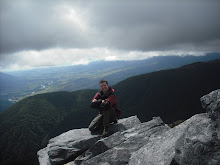
Deciding I was no longer fit to be left to my own devices, Colin and Mary took the next couple of days from work to show me around the Mornington Peninsula. The first stop was Cape Shank, a national park along the southern tip of the peninsula with tide pools, really cool rock formations, and a lighthouse. Out to prove that they could not suppress my idiot tourist instincts, I insisted on crossing an active tide pool to have my picture taking with the waves violently crashing on shore. On a rock. Upon which the waves were violently crashing. In retrospect there were many things that could have gone wrong (rogue wave, bad balance, earthquake, acrobatic shark), but what a picture!
 And while you may be thinking to yourself that YOU would have tested this theory several times before flinging yourself before the mercy of the elements, remember that the 85 degrees and warm southerly breeze would be enticing you to remove your clothing as quickly as possible (especially after the snow and ice endured up north). By midafternoon I had a mild inclination that I could be getting a sunburn, but it felt surprisingly refreshing at the time, like the first blast of heat upon entering a sauna. Come evening it was clear that something was horribly wrong...the heat of the afternoon was subsiding outside, while my skin remained in the sauna. I couldn't understand where I had gone wrong, that is until Jill and Mary, both native to the southern hemisphere and familiar with my predicament, explained the fault in my logic. The culprit? Ozone. Unbeknowst to me, it has a tendency to come and go in this part of the world, so while one day may yield little (or at least normal) radiation, the next can be quite different. Not only that, but the malicious southern sun is especially good at picking out the most awkward parts to burn, leaving me with burned spots on the forearms (farmer tan), feet (teva tan), ears (dumbo tan), back of neck (redneck tan), nose (rudolph tan), and the patches of forehead on either side of my receding hair line (baldy tan). Put them together and you've got the honky American hopeless asshole tan (HAHA tan). The forehead burn was by far the worst, perhaps because my forehead has been more or less covered since the last time I had my hair this short...leaving for summer camp about 13 years ago. Perhaps I should have used sunblock you say? Perhaps you shouldn't have used aerosol...jerk.
Deciding I was no longer fit to be left to my own devices, Colin and Mary took the next couple of days from work to show me around the Mornington Peninsula. The first stop was Cape Shank, a national park along the southern tip of the peninsula with tide pools, really cool rock formations, and a lighthouse. Out to prove that they could not suppress my idiot tourist instincts, I insisted on crossing an active tide pool to have my picture taking with the waves violently crashing on shore. On a rock. Upon which the waves were violently crashing. In retrospect there were many things that could have gone wrong (rogue wave, bad balance, earthquake, acrobatic shark), but what a picture!
Upon leaving, we discovered that the gate at the exit required financial incentive to move, and spent about 20 minutes scouring the depth of Luke (the Renault) for change. Feeling humbled and poor, we went wine tasting.
 Mornington really does has some fantastic wineries, producing some interesting and really refreshing reds and whites unlike many regions I've tasted. Some of my favorites included Main Ridge (great pinot), Paringa (really bright chardonnay and stinky, funky shiraz...in a good way), and Eldrige. David and Wendy Lloyd are a husband (winemaker) and wife (everything else) team behind Eldrige, and were also the ones who got me the pouring gig at the Mornington IPNC. They were both teachers until the 90's, and decided to take a chance and delve into the wine business, mortgaging everything they owned (several times) to plant a few acres and build a winery, which doubles as their house. Today, they managed to pay back everything they owed and are now living the dream, proof positive that it is possible to live the good life making wine even if you don't have millions to start with. Some times all you need is good credit, a little bit of patience, passion, dedication, and a dash of luck. They are some of the nicest people I have met (even by wine industry standards), and I happily traded them some help setting bird nets for the chance to taste through their cellar. Great stuff.
Later in the week Dave and Steph, some old college friends of Colin and Mary, came down for a visit, stopping down on their way to vintage in the Barossa valley. As we discovered over a few beers that afternoon, I had met Dave and Steph before. Dave had been thinking about working a vintage at Cristom two years ago, and had stopped by for a visit. Steve, the winemaker at Cristom, had been out of town that day so I had ended up giving them a tour of the facilities. Both Dave and Steph remembered the tour, and while he had decided to do vintage elsewhere, I was assured the tour wasn't what made his decision. It really is a small world.
I wouldn't be able to close the Australian chapter without saying a bit about the bush fires, which are the worst national disaster in Austalia's history. For those of you who haven't seen the international news in awhile, last Saturday while southern Australia was experiencing record heat (115 degrees) several fires broke out across the area north of Melbourne, an area of bush country with a few small communities just outside the suburban boundary of the city. Some of these fires were natural, began by a thunderstorm the previous evening, others were lit by arsonists. The heat, high winds, and months of drought combined into the perfect storm, and literally wiped towns off the map. The fires were hot enough to be deadly from 400 meters away, and moved at speeds of 110km an hour. People were caught in their cars trying to flee, chased down by the flames, while those that stayed and fought never had a chance. It was nothing short of hell on earth. The only good news to come out of this is how the country has reacted, within days $30 million in donations had poured in, even during the recession, and the government was telling fire victims to notify their local member of Parliament should insurance companies give any evidence of dragging their feet. While the scale is quite different, I found myself comparing the Australian reaction to the American reaction to Hurricane Katrina. I can only hope that it won't take years for the refugees to move out of the emergency tents and that the Australian Prime Minister never appears on the cover of Time magazine have to apologize for how he behaved in the recovery. Given what I've seen and heard from the media and talking to people, somehow I don't think either will happen.
Having tasted some great wines, eaten bbq kangaroo, and obtained a ridiculous sunburn (now peeling), the time had arrived for me to return to New Zealand and begin the next leg of my adventure. I thanked Colin and Mary and bid them farewell, hoped a train and a bus to the airport, and departed the land down under.

Sunday, February 8, 2009
Australia part 1
I had met Colin and Mary this past fall while working harvest in Oregon. Colin and I both worked at Cristom Vineyards (http://www.cristomwines.com/) while Mary worked up at Chehalem, although she spent a fair amount of time at Cristom as well (the harvest lunches at Cristom are legendary, especially in comparison to the standard lunch fare other wineries serve during harvest, usually a combination of hot pizza and cold pizza). Colin grew up in the bay area of California and was an artist before delving into wine, and he met Mary (a native Kiwi) while obtaining wine training at Lincoln University in New Zealand last year. They had left shortly after the Oregon harvest ended in November, having found impossibly cheap tickets to Australia and spontaneously deciding to do the spring vintage there. They both ended up finding work in the Mornington Peninsula, an up and coming Pinot Noir producing area south of Melbourne and invited me to come down and visit should I have some extra time before harvest. A few weeks ago I got an email from Colin saying that they had managed to land jobs pouring wine at the Mornington IPNC (http://mpva.com.au/), a wine festival that would feature many of the top pinot noirs being produced in Australia, Tasmania and New Zealand (with a few pinots from Burgundy, Oregon, and even Chile thrown in as well), and that they could get me a pouring gig as well. Great wine with beaches nearby and the chance to eat kangaroo? I'm there.
I booked a plane ticket on Pacific Blue (one of two no frills discount airlines in Oceania) to Melbourne, leaving the day after I arrived in Auckland. Despite having unburdened myself of some wine the previous day, I had kept a few bottles with me to give as gifts to wineries I planned to visit along the way (a trick I had learned in Italy a few years ago). The trouble was that wine bottles are rather heavy and classified as a terror-inducing prohibited carry-on item, so all of my clothing now became a carry-on item instead. God help us if some idiot figures out how to make a bomb out of cotton.
 I passed the time in the airport figuring out rugby (the US even won a game, nevermind that they beat Fiji) and feeding the birds (yes, there are birds flying around in the international terminal of the Auckland airport). Turns out Pacific Blue is owned by Virgin Airlines, and both Virgin and Pacific Blue had the same curious habit of playing music during takeoff and landing. At first I thought this was to distract nervous fliers, but as it turns out the purpose is much more practical; the music choices reflect the culture of the place where they are played. On my Virgin flight from Seattle to LA for example, indie rock was played during takeoff and pop rock as we touched down. Taking off from Auckland indie rock was also the music of choice (albeit with a New Zealand twist), while touching down in Melbourne was the sort of mixture of 80's rock and techno that we all hoped died in Germany 10 years ago.
 This wasn't the only thing wrong with Australia. The southern half of the country is going through one of the worst droughts and heat waves in recorded history, while the northern half is under water from flash floods. The vineyards here have already suffered crop losses of 30-50% due to sun damage, with the possibility of additional losses in the next few weeks before harvest. Things are so dry that brush fires have started breaking out all over the areas north and west of the city, and several vineyards and even a small town have literally been wiped off the map. Fortunately the place I was going was south along a peninsula with more of a marine influence, but things are clearly not going well for much of the area.
Passing through customs proved a rather annoying experience. While New Zealand took no time at all and even included humorous anecdotes about preserved vegetables, Australia was much more intense, demanding to sift through my camping gear and checking to make sure that I hadn't surpassed my wine allowance. They even made me pull out my unopened pack of trail mix to determine whether I had devised a new way to introduce invasive species via dried cranberries and nuts. It was around 7pm by the time I finally made it through, and I still had to find my way to Dromana, a tiny beach suburb about 40k south of Melbourne where Colin and Mary lived. I had instructions to get there via train to Frankston, which departed regularly from downtown Melbourne. I shouldered my backpack, found a shuttle downtown, and settled back to take in the city.
The city is quite large and modern, with a river knifing through skyscrapers reminiscent of the loop in downtown Chicago. Its the second largest city in the country (after Sydney) with just under 4 million people in the city proper. It is relatively young, having only been founded around 1850, but still retains some pretty interesting stone architecture and green spaces that seem to be lacking in a lot other modern cities of similar size. Although at the moment I had other places to be, Melbourne is a place where I could see myself spending a bit of time. Maybe I will.
 The bus station was still sweltering despite the late hour, but I managed to track down the train station without too much trouble. On the train ride south I observed that Australians certainly have their own style, some of it borrowed (the women seemed to have just figured out the little black dress) and some of it entirely their own (the men still wear the same flashy t-shirts made famous by the extras in Crocodile Dundee). Colin and Mary met me in Frankston, and we drove the 15 minutes south to their place in an ancient Renault that looked like it had been on the losing end of a chase scene with Inspector Clouseau.
 Colin and Mary had found accommodations for the harvest with an Australian artist named Jill, who was in her early 50's and had two children (one around my age and the other still finishing college in Perth). The house itself was fantastic, full of eclectic pieces of artwork and very comfortable, with a back porch that had a distant view of the ocean. There was a second building in the backyard with two rooms, one that Colin and Mary were staying in and another that housed Jill's studio. They had set me up with a mattress in the studio, which was a welcome surprise from the camping mattress on hardwood floor I had expected. The studio had a window near the ceiling that faced west, and around midnight the full moon shown through it and filled the room with soft light. Awesome.
We headed to bed rather early, having to get up around 7 to make it to the wine festival the next morning. The festival itself was at the Lindenderry Resort (which also had its own vineyard), and featured about 35 different wineries, mostly from the Mornington Peninsula (it was their festival after all). Turns out that one of these wineries just so happened to be Escarpment, the vineyard where I'll be working harvest in New Zealand next month (http://www.escarpment.co.nz/). And Larry McKenna, the winemaker I'll be working for, just so happened to be the guy that was showing their wines. I met him for the first time that morning, and was pleased to note that we shared a similar taste in footwear (teva sandals). He may not look like a winemaker (more of a rugby coach or a retired army drill sergeant), but the man makes some damn good wine. He was very pleased that I wasn't a scrawny hipster from the NW, although he did comment that he planned on putting more meat on my bones. Given his reputation for drinking and eating well, I couldn't be happier.
 The keynote speaker for the festival was Jancis Robinson, who among her other accolades is the editor for the Oxford Companion to Wine, my bible during the early days of working in the tasting room at Cristom. She is, quite simply, a legend. We spent the day polishing glassware and pouring wine for the morning and afternoon tasting sessions, trying our best to stay in the air conditioned places and escape the 114 degree blasting everything outside (a new record!).
 After the glasses were set and the wine poured, we would retire to a back room and press our ears against the wall, listening to the same lectures and sipping the same wine that the attendees had paid $900 for. Granted we were working for free, but a few hours of polishing and pouring in exchange for musing over which vintage of grand cru burgundy is showing better sounds like a good deal to me. And while we didn't get to attend the posh banquet that night, we were allowed to take home any of open wine that was left over (it gets dumped anyway). I daresay we had a far better time that evening eating pizza and conducting our own private tasting (featuring 24 different pinots from 5 countries) than we ever could have in some decadent hotel full of largely pretentious and stuffy people. Life is good.

The festival ended Sunday afternoon, and we spent the remainder of the day lounging around with Jill before enjoying a fantastic dinner. The only thing I really had planned for this part of the trip was the wine festival, and as my flight doesn't leave until the afternoon of the 14th, I have some time to kill. I have a feeling the beach will factor largely into this equation, although Tasmania is only about an hour away by plane...
Subscribe to:
Posts (Atom)